
Finding Your “Branch” of Support: How to Identify a Safe Environment for Healing
- Finding Your "Branch" of Support: How to Identify a Safe Environment for Healing
- 🌿 Step 1: Understand What a “Safe Environment” Really Means
- 🧠 Step 2: Notice How You Feel Around People
- 🚫 Step 3: Recognize Unsafe Environments
- 🌱 Step 4: Build Your Own Safe Space
- 🤝 Step 5: Find the Right Support System
- 🌟 Step 6: Give Yourself Permission to Choose Better
- 🌙 Final Thoughts: Your Healing Needs the Right Space
- ❓ Frequently Asked Questions
- 💬 Ready to Find Your Safe Space?
Have you ever felt like you’re trying to heal… but the environment around you just isn’t helping?
Like a bird searching for the right branch to land on—you need stability, safety, and support before you can truly rest and grow.
In this post, we’re going to walk through how to find (or create) your “branch” of support—a safe environment where healing can actually happen.
Let’s take it step by step 👇
🌿 Step 1: Understand What a “Safe Environment” Really Means
A safe environment isn’t just about physical space—it’s emotional too.
It’s a place where you feel:
- Heard without judgment
- Respected for who you are
- Free to express your thoughts and feelings
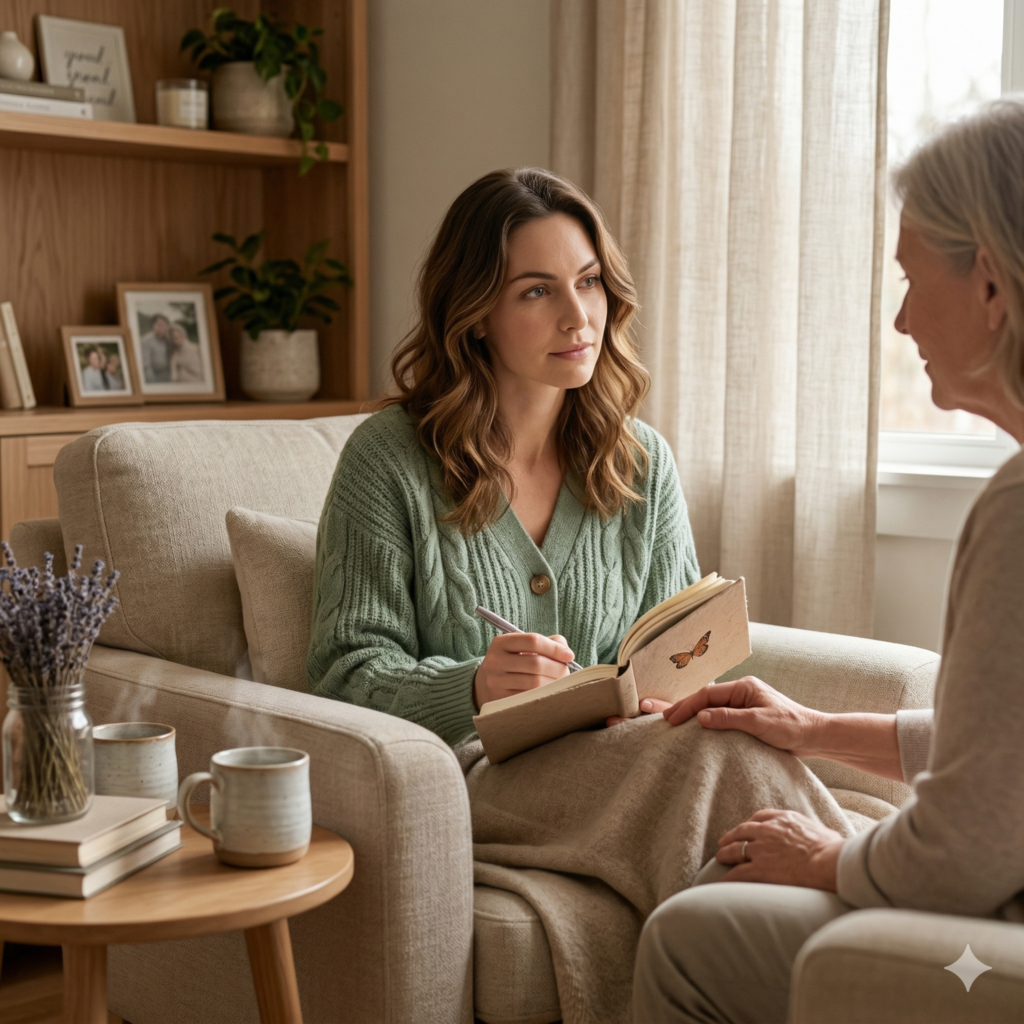
👉 What you’re seeing: A calm space where you can speak openly and feel understood.
Quick recap: Safety = emotional comfort + trust + respect.
🧠 Step 2: Notice How You Feel Around People
Your body often knows before your mind does.
Pay attention:
- Do you feel relaxed or tense?
- Do you feel accepted or judged?
- Do you feel energized or drained?
These signals help you identify whether someone is part of your support system—or not.
👉 What you’re seeing: Two scenarios—one where you feel at ease, another where you feel uncomfortable.
Quick recap: Your feelings are clues—listen to them.
🚫 Step 3: Recognize Unsafe Environments
Not every space supports healing—and that’s okay to acknowledge.
Watch for:
- Constant criticism
- Dismissed feelings (“you’re overreacting”)
- Lack of boundaries or respect
These can slow down or even block your healing process.
👉 What you’re seeing: A situation where your voice feels ignored or minimized.
Quick recap: Awareness protects your growth.
🌱 Step 4: Build Your Own Safe Space
If you don’t have a perfect environment—don’t worry. You can start creating one.
Try this:
- Set small boundaries (even simple ones)
- Create a calming personal space (journal, music, quiet time)
- Limit exposure to negativity
👉 What you’re seeing: A cozy corner, a journal, a moment just for you.
Quick recap: You can create safety, even in small ways.
🤝 Step 5: Find the Right Support System
Support doesn’t have to be a big group—it just needs to be the right people.
This could include:
- A trusted friend
- A family member
- A therapist or counselor
Look for people who:
- Listen actively
- Validate your feelings
- Encourage your growth
👉 What you’re seeing: A meaningful conversation where you feel truly heard.
Quick recap: One safe connection is more powerful than many surface-level ones.
🌟 Step 6: Give Yourself Permission to Choose Better
Here’s something powerful:
You’re allowed to choose environments that support your healing.
Even if that means:
- Taking distance from certain people
- Saying “no” more often
- Prioritizing your well-being
👉 What you’re seeing: You confidently choosing what supports your peace.
Quick recap: Choosing yourself is part of healing.
🌙 Final Thoughts: Your Healing Needs the Right Space
Healing isn’t just about inner work—it’s also about where that work happens.
The right environment:
- Supports your growth
- Protects your energy
- Helps you feel safe enough to be real
Like a bird finding the right branch… once you land in the right place, everything starts to feel different.
❓ Frequently Asked Questions
1. What if I don’t have a support system right now?
That’s okay. Start small—focus on creating personal safe spaces and consider seeking professional support.
2. How do I know if someone is emotionally safe?
You feel heard, respected, and not judged. Your thoughts and emotions are taken seriously.
3. Is it okay to distance myself from people?
Yes. Protecting your mental health is not selfish—it’s necessary.
4. Can therapy help create a safe environment?
Absolutely. Therapy provides a structured, supportive space designed for healing and growth.
Quick recap: Safety can be built, step by step.
💬 Ready to Find Your Safe Space?
You don’t have to navigate this alone.
If you’re ready to:
- Feel heard without judgment
- Understand your emotions more deeply
- Build a safe, supportive environment for your healing
👉 Book a therapy session and take the first step toward emotional safety and clarity.
A calm space. A real conversation. A path forward 💛
✨ Your healing deserves a safe place to grow—start building it today.