

Therapy for First Responders Florida: Understanding Burnout and Secondary Trauma
- Therapy for First Responders Florida: Understanding Burnout and Secondary Trauma
- Why Caring for Others Can Take a Toll
- Chronic Stress, Burnout and Secondary Trauma: What They Mean
- Signs to Watch For
- What Support Can Look Like for People Who Care for Others
- Practical First Steps You Can Take Today
- Therapy Close to Home in Southwest Florida
- Frequently Asked Questions
- You Deserve Care, Too
You show up for other people on their hardest days. You stay calm when everyone else cannot, and you carry what you see home with you, often in silence. If that sounds familiar, you are not weak, and you are not alone.
This article is for nurses, doctors, EMTs, firefighters, police officers, and military personnel and veterans across Lehigh Acres, Fort Myers, Cape Coral and Lee County. We will explain burnout and secondary trauma in plain words, share signs to watch for, and describe how therapy for first responders in Florida can offer a place to rest, too.
Why Caring for Others Can Take a Toll
Helping professions ask a lot. Long shifts, constant alertness, emotional weight and little time to recover can add up. Over time, the body and mind may start to feel the strain, even in people who love their work.
Many people in these roles were taught to push through. Asking for help can feel like a failure or a risk. But needing support is a human response to carrying a heavy load, not a flaw in your character.
Chronic Stress, Burnout and Secondary Trauma: What They Mean
These terms are often mixed together. Here is a simple way to tell them apart, though they can overlap.
Chronic stress
Chronic stress is what happens when your system stays “on” for too long. Your body keeps preparing for the next demand and rarely gets to settle. It can show up as tension, poor sleep, irritability or feeling constantly wired and tired.
Burnout
Burnout is deep exhaustion tied to work. It often comes with feeling drained, detached or doubting whether what you do makes a difference. Healthcare worker burnout is common, and so is burnout among police officers, firefighters and EMTs. It is a sign of overload, not a lack of dedication.
Secondary trauma and compassion fatigue
Secondary trauma can happen when you are repeatedly exposed to other people’s pain, loss or crises. You may not have lived the event yourself, yet it can still stay with you. Compassion fatigue is the emotional tiredness that can follow from giving care again and again, until it feels hard to feel anything at all.
Signs to Watch For
Everyone reacts differently, and having some of these does not mean something is “wrong” with you. Pay attention if several of them last for weeks.
- Trouble sleeping, or waking up already exhausted
- Feeling numb, detached or emotionally flat
- Irritability, a short temper or feeling on edge
- Intrusive thoughts or images from work that are hard to shake
- Dreading shifts or feeling dread about going to work
- Pulling away from family, friends or activities you used to enjoy
- Headaches, stomach trouble or muscle tension with no clear cause
- Feeling like nothing you do is enough
- Using more alcohol or other substances to wind down
If you recognize yourself here, take a breath. Noticing is a brave first step.
What Support Can Look Like for People Who Care for Others
In nurse burnout therapy, first responder mental health care, or support for veterans, the goal is not to take away your strength. It is to give you tools, space and understanding so that strength does not cost you your well-being.
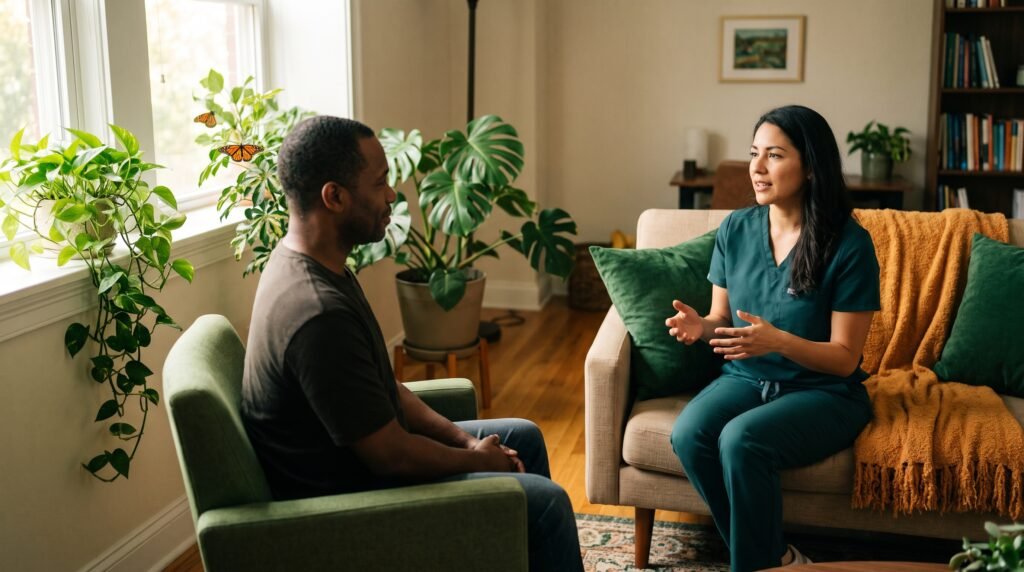
Yeney Ruiz, LCSW-QS, is the founder and therapist at Vicney Mental Health. She has over 10 years of clinical experience focused on trauma and PTSD, and she designs programs for armed forces members, veterans and healthcare workers. At Vicney, the people who care for others are the ones who receive care.
Therapy is offered at your pace. Vicney’s approach includes building stabilization tools first, so you feel steadier before any difficult memories are explored. This helps avoid re-traumatization. Depending on your needs, the practice draws on approaches such as EMDR and cognitive-behavioral techniques for trauma, mindfulness, and nervous system regulation. You can learn more on the Specialties page or read about Yeney on the About page.
Ready to talk?
If you would like to ask questions or explore whether therapy feels right, you can Schedule a Consultation. There is no pressure to have everything figured out first.
Practical First Steps You Can Take Today
You do not have to change everything at once. Small steps count.
- Name what you are feeling. Saying “I am exhausted and carrying a lot” to yourself or someone you trust can ease the weight.
- Protect your sleep. Even small routines, like a consistent wind-down time, can help your body settle.
- Create a pause after work. A short walk, a shower or a few slow breaths can mark the shift between work and home.
- Reach out to one person. A colleague, friend, family member or faith community can help you feel less alone.
- Try gentle daily habits. Our post on daily habits for a stronger mindset offers ideas you can start small with.
- Consider talking with a therapist. Support from someone trained in trauma can help you sort through what you are carrying.
Therapy Close to Home in Southwest Florida
Vicney Mental Health is based in Lehigh Acres, in Lee County. Online sessions are also offered, which can be helpful when your schedule is unpredictable or you prefer privacy. You can read more in our post about online therapy in Lehigh Acres.
Seeking therapy for first responders in Florida can feel like a big step, especially if you worry about what others may think. A safe, respectful space matters, and that is what the practice aims to provide.
Frequently Asked Questions
What is the difference between burnout and secondary trauma?
Burnout is exhaustion from prolonged work stress and feeling overwhelmed or detached. Secondary trauma comes from repeated exposure to other people’s pain or crises. They can overlap, and both are understandable responses to demanding work.
Do I have to be a first responder or healthcare worker to get support at Vicney?
No. Vicney offers support for many concerns, including trauma, anxiety, depression and burnout. The practice has a special focus on first responders, healthcare workers, veterans and armed forces members.
Is it normal to feel numb or detached after difficult calls or shifts?
Yes, it can be a common way the mind protects itself. If the numbness lasts or interferes with your relationships, sleep or daily life, talking with a licensed professional can help.
Are online therapy sessions available?
Yes. Vicney offers online (virtual) sessions in addition to serving the Lehigh Acres community. For details on scheduling, see the Book Appointment page or contact@vicney.com.
You Deserve Care, Too
You have spent so much energy caring for others. You are allowed to be cared for, and healing can unfold gradually, like the monarch’s own transformation. If you are ready, you can Schedule a Consultation with Vicney Mental Health.
About the author: Yeney Ruiz, LCSW-QS, is the founder and therapist at Vicney Mental Health, a psychotherapy practice in Lehigh Acres, Florida.
This article is for general information and does not replace an individual assessment by a licensed mental health professional. If you are in crisis in the U.S., call or text 988 (Suicide & Crisis Lifeline), or call 911 in an emergency.